Here is something most homeowners never hear before they start a kitchen cabinet painting project: the part that decides whether your cabinets still look good in five years has almost nothing to do with the paint color. It comes down to prep. That one fact is what separates a rushed weekend job from the work professional kitchen cabinet painters do, and it explains why two kitchens painted the very same shade can age in completely different ways.
If you live in Conway and you are weighing whether to grab a brush yourself or hire someone, this is the comparison that actually matters. Not the price on the paint can. The prep.

Why Prep Decides Everything
Paint does not stick to a surface just because you rolled it on. It needs something to hold onto. Sherwin-Williams puts it plainly: a hard, slick, glossy surface gives a coating no profile to grab, so the paint is likely to peel. Their fix is simple. Sand the shine off first.
Kitchen cabinets make this harder than almost any other surface in your home. They sit right next to the stove. Years of cooking leave a thin film of grease and oil on every door. Paint will not bond to that film. So the real first step is not sanding at all. It is cleaning.
This is the quiet reason so many DIY cabinet jobs fail. The cabinets looked clean. They were not.
What DIY Prep Usually Looks Like
A typical weekend approach goes like this. Wipe the doors down with a household cleaner. Give them a quick scuff with sandpaper. Brush or roll on a couple of coats. Reattach the doors by Sunday night.
It looks fine at first. Then the trouble shows up, usually around the handles and edges where hands touch most. Paint starts to chip. A door corner peels. Within a year or two, the finish that looked new is flaking off.
None of that means the homeowner did a bad job. It means cabinets are fussy surfaces that punish shortcuts. Angi reports that a careful DIY cabinet project takes 20 to 40 hours or more, including prep, painting, and putting everything back together. Most of that time goes into the part people are tempted to rush.
What Professional Kitchen Cabinet Painters Do Differently
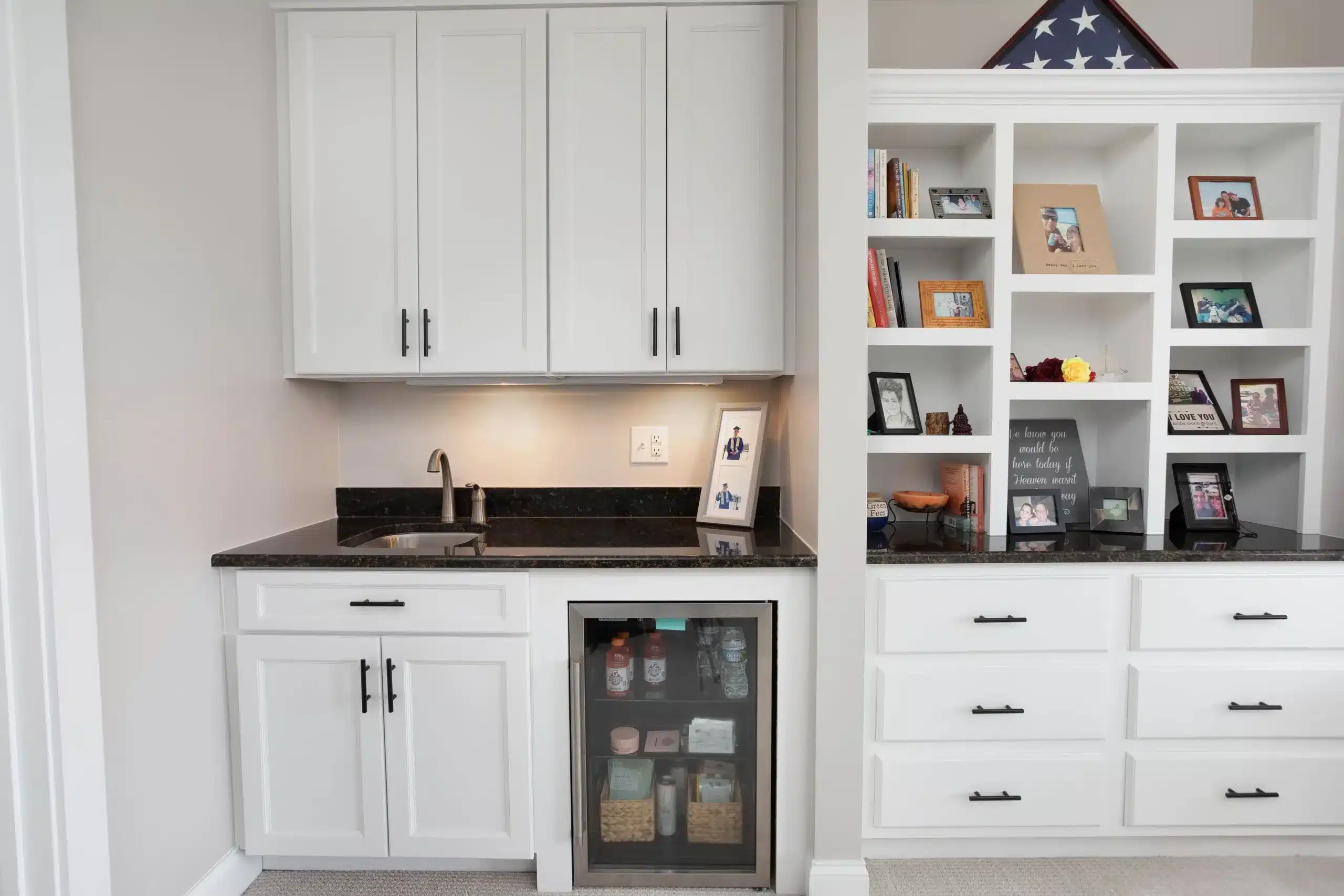
Here is where the two paths split. The steps below are the ones that separate a finish that holds up from one that does not.
The Real Cost of Skipping Steps
Money is usually what pushes people toward DIY, and the gap is real. Supplies for a do-it-yourself cabinet job run about $200 to $600, according to Angi. Hiring a pro costs more, with cabinet painting averaging around $940 and most projects ranging from $425 to $1,465. Larger kitchens can reach a few thousand.
Now look at the other side of that comparison. Replacing your cabinets averages $6,366 and often climbs past $11,000, per HomeAdvisor. Painting keeps your existing layout and skips the demolition, which is why it stays the cheaper route by far.
There is also the cost nobody budgets for: the redo. If a DIY finish peels, you pay twice. First, in your own time; then again, have a pro strip the failed coat and start over. Angi notes that roughly 70 to 80 percent of the cost of a professional cabinet bill is labor. You are not paying for paint. You are paying for the hours of prep that make the paint last.
DIY vs. Hiring: An Honest Look
DIY is a fair choice in some cases. If your cabinets are simple, you have a free week, and you are happy to do slow, careful prep, you can get a solid result.
Hiring makes more sense when your cabinets are slick laminate or thermofoil, when you want a sprayed factory-style finish, or when you cannot give up your kitchen for several weekends in a row. A pro also carries the risk. If something goes wrong, the fix is on them, not you.
The honest version is this. DIY can save you money if you treat prep as the main event. Most failed cabinet jobs come from treating prep as the warm-up.
How to Choose Kitchen Cabinet Painters You Can Trust
If you do hire, the right questions protect you. Before you sign anything, ask:
Any honest pro will walk you through their steps without dodging. So when you search for cabinet painters near me, those answers tell you far more than star ratings alone.