On a humid August morning in Myrtle Beach, the deck is the first place a lot of people want to be. So whether to paint or stain deck boards is the choice that stops many homeowners cold in the hardware store aisle. The deck paint vs stain question sounds like a coin flip. On the coast, it is anything but. Salt air, steady heat, and more than 50 inches of rain a year treat these two finishes very differently. Pick wrong, and you can pay twice: once to put the finish on, and again to scrape it off when it lets go.
Here is the part most store displays skip. The “which one lasts longer” framing is the wrong way in. On a deck, which is a flat surface that holds water and takes foot traffic, what matters more is how a finish fails. One wears down slowly and quietly. The other can peel in sheets and leave you with a stripping bill. So the smarter question for a coastal homeowner is not which finish lasts longest. It is which one fails in a way you can live with.

The Real Question Behind Deck Paint vs Stain on the Coast
Most advice online treats paint as durable and stain as a natural look. That is too simple for Myrtle Beach. A deck floor lies flat. Rain pools on it. Sun bakes it. People walk across it in wet swimsuits all summer. That mix is hard on any finish.
Paint and solid stain form a film on the wood. The film looks even and hides flaws. But when water gets into the board from below or through a crack, the film traps it. The trapped moisture pushes back out, causing the finish to blister and then peel. Once peeling starts on a deck floor, it spreads fast.
Penetrating stain works the other way. It soaks into the wood instead of forming a shell. It still wears, but it wears thin and even. You see fading, not flaking. Federal wood researchers at the USDA’s Forest Products Laboratory put it plainly. Film-forming finishes like paint and solid stain tend to trap moisture and fail by peeling. Penetrating finishes are the ones they recommend for wood decks.
What Salt Air and Humidity Do to a Deck Finish
Myrtle Beach sits in a humid subtropical climate. Average humidity hovers around 75-78 percent, and the area receives about 53 inches of rain per year. Wood does not stay still in those conditions. It swells when it is wet and shrinks when it dries in the sun. Every cycle tugs at whatever is on the surface.
A flexible, soaked-in finish moves with the wood. A hard film fights that movement, and over time the film loses. Salt makes it worse because it pulls moisture into the wood and keeps the boards damp longer than they would be inland. The closer your deck is to the ocean, the harder this gets.
Paint on a Coastal Deck: The Upside and the Catch
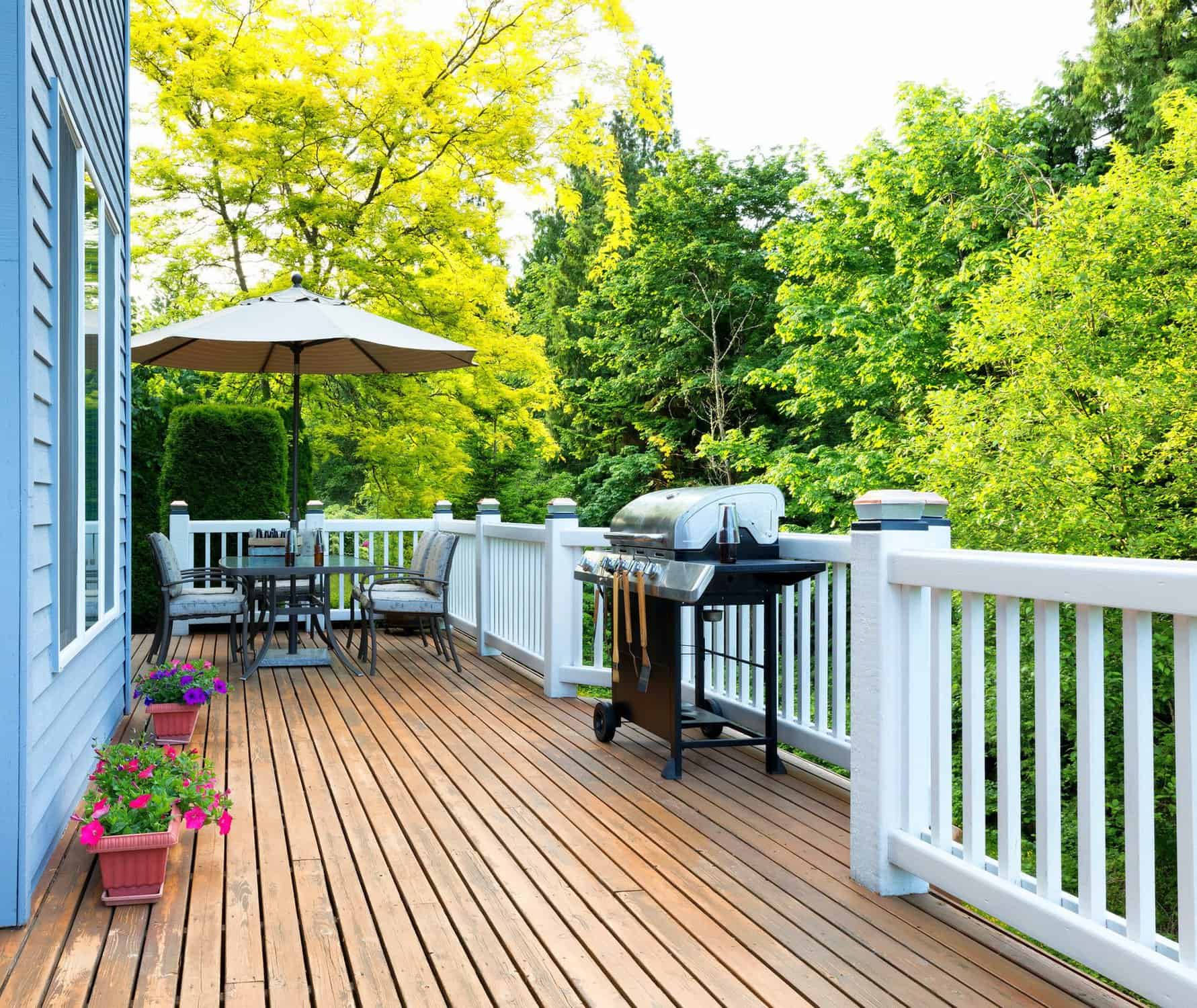
Paint is not the villain here. It has real strengths. It gives you any color you want. It hides gray, weathered, or patched wood. Railings, posts, pergolas, and fence boards stand upright and shed water. On those surfaces, paint and solid stain can last for years and look sharp.
The catch is the deck floor. National cost data from Angi puts deck painting at roughly $2 to $5 per square foot, and that is money well spent on vertical surfaces. On the flat walking surface, though, a coastal deck puts paint in the worst possible spot: flat, wet, and hot. When it fails, removing old paint from wood can run $9 to $12 per square foot. That is often more than the original job cost.
Stain on a Coastal Deck: The Upside and the Catch
Stain, and semi-transparent stain in particular, is built for the part of the deck you walk on. It soaks in, repels water, and lets the wood breathe. As it ages, it fades rather than peels, so recoating is simple. A wash and a fresh coat runs about $0.50 to $1.50 per square foot when you stay on schedule.
The catch is the schedule. Semi-transparent stain on a flat, sunny deck usually needs a fresh coat every two to three years. Let it go too long, and the wood grays and dries out, which means more prep the next time around. Stain also offers fewer bold color options than paint. For most homeowners who use their deck every day, that trade is worth making. You get lighter upkeep, easier recoats, and no peeling.
Deck Paint vs Stain: A Quick Side-by-Side
Here is the short version, side by side:
| Paint / Solid Stain (film) | Penetrating / Semi-Transparent Stain | |
|---|---|---|
| How it sits on the wood | Forms a film on the surface | Soaks into the wood |
| How it fails | Blisters and peels | Fades and wears thin |
| Recoating it | Strip first, then recoat | Wash and recoat |
| Cost to redo (per sq ft) | $9-$12 to strip failed paint | $0.50-$1.50 on schedule |
| Color range | Any color, hides flaws | Fewer bold colors, shows the grain |
| Best spot on a coastal deck | Railings, posts, fences (vertical) | Floor and stairs (flat, foot traffic) |
The table points one way, but the real call is still by location on the deck, not as one single winner:
This is why a blanket “paint is better” or “stain is better” answer falls apart. The deck is not one surface. It is several, and they do not all want the same thing.
A Simple Plan for the Right Finish
You do not need to become a coatings expert. You need a short, sane process:
- Look at how each part of the deck sits. Flat and walked-on calls for stain. Upright and drier can take paint or solid stain.
- Check the wood’s age and condition. New wood loves semi-transparent stain. Tired wood may need solid stain or paint where it shows the least.
- Prep before you coat. Clean it, sand the rough spots, and let the wood dry. Most finish failures on the coast start with skipped prep or coating damp wood.
- Match the finish to your upkeep style. Want the lowest-drama path? Lean toward stain on the floor and recoat on a two- to three-year rhythm.
- Get a local set of eyes on it before you buy a single can.
Where a Local Crew Earns Its Keep
A finish is only as good as the wood under it and the prep behind it. That is the part homeowners cannot see from the store aisle, and it is where coastal experience pays off. A crew that works on decks in North Myrtle Beach, Conway, and Longs every week knows how this wood behaves in this air.
Carroll Custom Coatings is a member of the Painting Contractors Association and backs its work with a three-year workmanship warranty. That matters on the coast, where the difference between a finish that lasts and one that peels often comes down to prep and the right product. You can see how the team handles deck and fence painting, cleaning, sanding, and repairing each board before any stain or paint goes on.