Drywall repair before painting is the step that decides how a new paint job looks a year from now. Fresh paint does not hide a damaged wall. It puts a spotlight on it. Drywall cracks, nail pops, dents, and water stains tend to stand out more under one clean, even color. My crew and I see it on interior house painting jobs all over the Grand Strand.
So which flaws need a fix, and which are fine to paint over? Below, I cover the common signs, what each one means, and what to do first. If your home is in Longs, SC, our humid summers make a few of these signs worth a closer look.

Why New Paint Makes Old Wall Damage Easier to See
Here is something most people do not expect. A wall with a tired, uneven color actually hides a lot. Once a room gets one clean coat of color, the eye has nothing else to look at. Every bump, line, and patch stands out.
Sheen plays a part too. The Gypsum Association’s GA-214 standard was written with input from the Painting Contractors Association. It sets levels of finish for drywall. It calls for a smoother Level 5 finish when walls get glossy paint, deep colors, or strong side light from windows. Flat paint on a standard Level 4 wall is more forgiving.
No one wants to pay for new paint and then stare at the same crack every night. The upside is that most of these signs can be spotted before work starts.
Try this quick test. Turn off the overhead light, then hold a flashlight flat against the wall and aim the beam across it. Side light throws shadows into dents, ridges, and seams that look fine when you face the wall head on.
Drywall Cracks: Which Ones Need a Fix First
Not all drywall cracks mean the same thing. Some come from normal house movement. Others point to a problem a painter should not cover up.
| What You See | What It Often Means | What to Do Before Painting |
|---|---|---|
| Thin crack at the corner of a door or window | Normal stress at a weak point in the wall | Tape, fill, sand, and prime |
| Straight crack along a seam | Joint tape pulling loose | Cut out loose tape, re-tape, and refinish |
| Crack with a brown or yellow stain | Moisture behind the wall | Find and fix the leak first |
| Crack that grows, comes back, or shows up with sticking doors | Possible framing or foundation movement | Have a structural pro check it first |
My honest take is this. A hairline crack is not a reason to panic, but it is a reason to repair before painting. Paint by itself cannot hold a crack together. It tends to split again along the same line.
If a crack keeps coming back after a patch, that is a job for a structural engineer or foundation pro first, not a painter. I would rather tell you that up front than paint over it.
Nail Pops, Dents, and Holes
Nail pops look like small round bumps or circles. They often sit in a straight row up a wall or across a ceiling. They usually show up as wood framing dries and shrinks, which loosens the hold between the drywall and the stud. The Journal of Light Construction names wood shrinkage as the common cause. That is why newer homes often show them in the first year or two.
Each of these flaws is small on its own. Together, they decide how smooth the finished wall looks.
Signs of Water Damage in Walls You Should Not Paint Over
This is the one group of signs where paint can make things worse. Painting over wet drywall can trap moisture and hide a problem that keeps growing. Watch for these:
The EPA notes that mold usually will not grow if wet materials are dried within 24 to 48 hours. It also says drywall can only be dried in place when there is no obvious swelling and the seams are intact. If not, the damaged section needs to come out. You can read more on the EPA page about drying water-damaged materials.
So the order matters. Fix the leak first, let the area dry, then repair or replace the drywall. A roofer or plumber handles the leak. My crew handles the wall after that, since drywall repair is part of our interior house painting work.
How I Check Walls Before We Paint
This plan keeps surprises off your walls and off your bill.
One more check for older homes. If your house was built before 1978, EPA rules require contractors who disturb more than six square feet of painted surface in a room to follow lead-safe work practices. Sanding and patching count. The EPA Renovate Right pamphlet explains what to ask before work starts.
What Skipping Drywall Repair Before Painting Costs You
Skipping repairs can look like a way to save time and money. In practice, the flaws come right back through the new paint.
| Skip the Repair | Repair First |
|---|---|
| Cracks open again along the same line | Cracks are taped and filled so they hold |
| Patches and dents show through the new color | The wall reads as one smooth surface |
| Water stains bleed through the topcoat | Stains get sealed under primer |
| Moisture stays trapped behind fresh paint | The leak is fixed and the wall is dry |
| The room needs to be redone sooner | The paint gets its full life span |
Painting a room twice costs more than repairing it once. That is the plain math behind doing the prep work first.
What a Wall Looks Like When the Prep Is Done Right
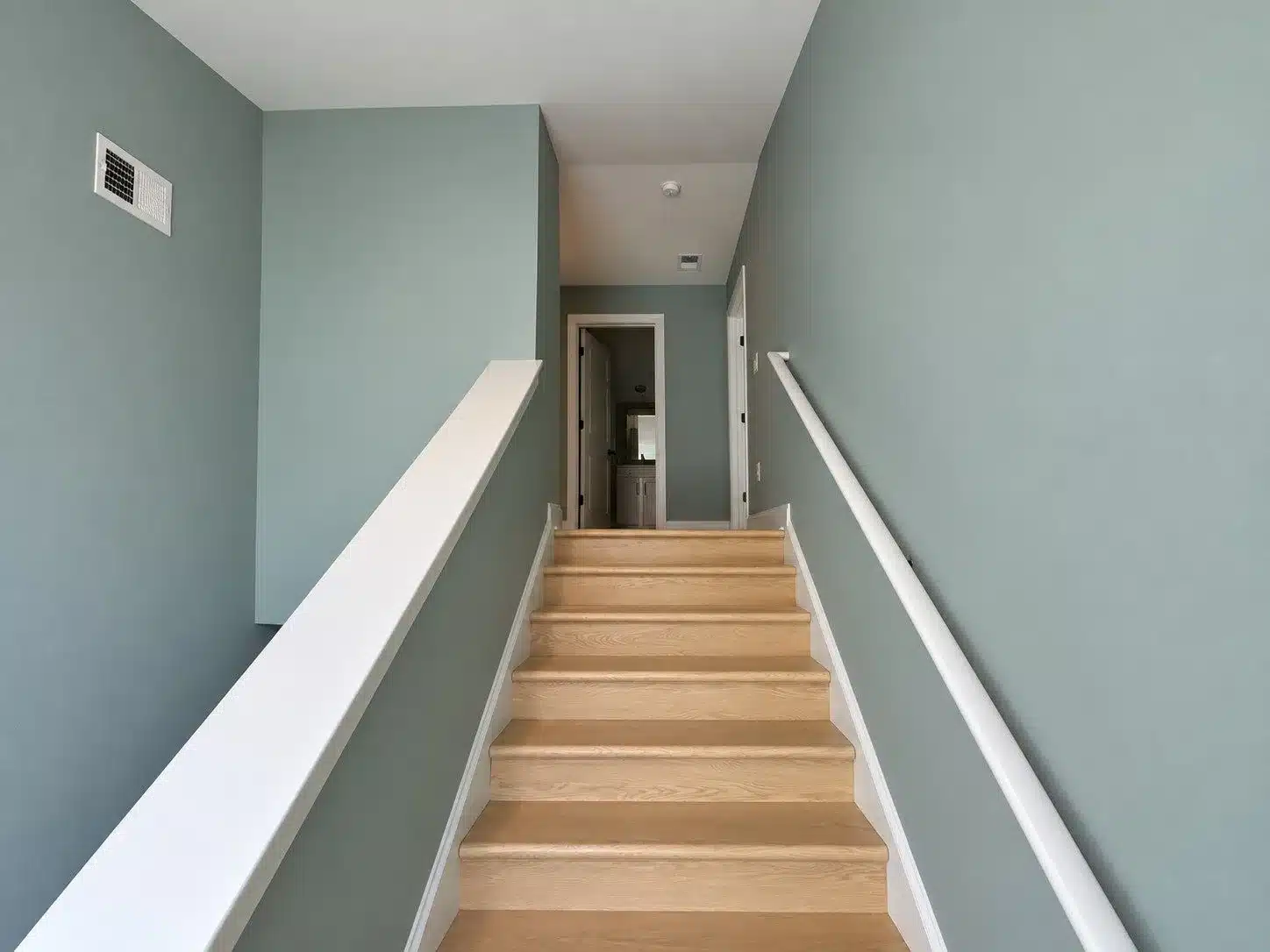
When repairs come first, the paint has an even base to grip. The color looks the same from corner to corner, even when the afternoon sun hits it. There are no shadow lines at the seams and no rings bleeding back through the ceiling.
That is the result I want for every home we paint, from North Myrtle Beach to Conway and Carolina Forest. A wall that looks finished should stay that way.