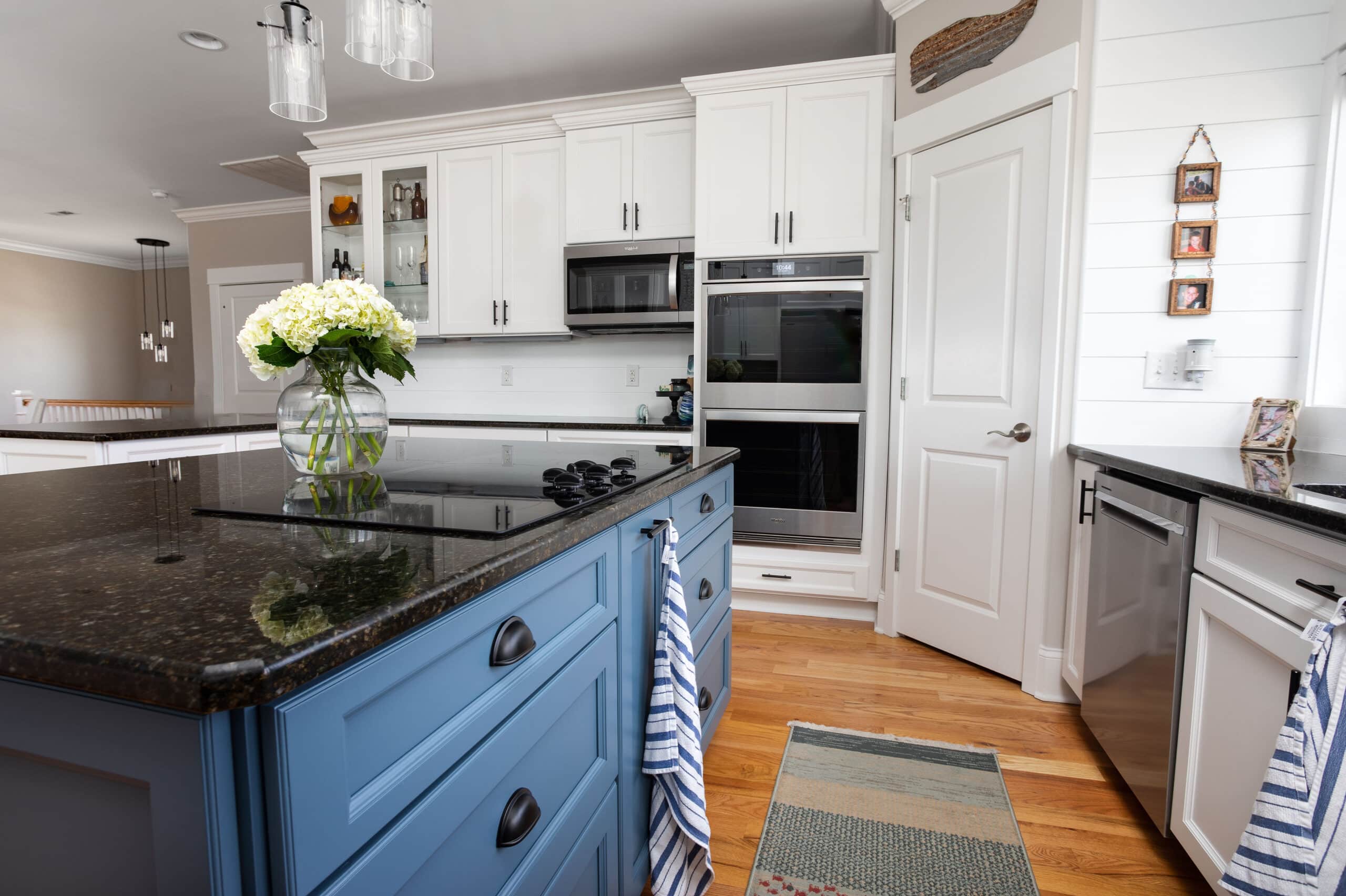
A homeowner asked me a question last month that I hear all the time. She wanted to know how to keep cabinet paint from chipping when two toddlers use the kitchen island as a racetrack. It’s a fair question, and it usually leads to a bigger one. How long do painted cabinets last when real life is happening in that kitchen every single day? I have painted cabinets all over Myrtle Beach, Conway, and Longs through our cabinet painting services. The honest answer depends on three things: the prep work, the paint itself, and how the cabinets get treated after we leave. Get those three right, and painted cabinets can look sharp for a decade or more. Get them wrong, and you are repainting sooner than anyone wants.

How Long Do Painted Cabinets Last in a Real Kitchen?
Here is the range I give homeowners honestly. Professionally painted cabinets last 8 to 10 years on average, based on what painting professionals across the country consistently report. Some kitchens push past that when the paint and prep were both done right. Others fall short of it fast, usually because a step got skipped.
The paint itself plays a bigger role than most people expect. Sherwin-Williams describes its urethane trim enamel as a hard, durable finish built for surfaces that get cleaned often. That is exactly what a kitchen cabinet needs. Standard wall paint was never built for that kind of daily contact, and it shows within a year or two.
So when someone asks how long do painted cabinets last, my answer always comes back to one thing. The finish only holds up as long as the surface underneath it was prepared to receive it.
What Actually Wears Cabinet Paint Down
Kitchens are rough on a finish in ways most other rooms are not. Grease from cooking settles on cabinet doors near the stove. Steam from dishwashers and boiling pots adds moisture to the air. Hands touch the same spots near handles and pull dozens of times a day.
None of that is anyone’s fault. It is just normal kitchen life, and it is exactly why cabinet-grade paint exists in the first place. A finish that is not built for that kind of contact will show chips, dullness, or peeling well before it should. That is why the question of how to keep cabinet paint from chipping is such a common one in busy kitchens.
Coastal humidity adds another layer here in Myrtle Beach and Conway. Moisture in the air slows curing time and can soften a weak finish faster than it would inland. That is one more reason the paint choice and the prep work matter so much here. It shapes how long do painted cabinets last in a coastal climate.
The Real Cost of Guessing Wrong
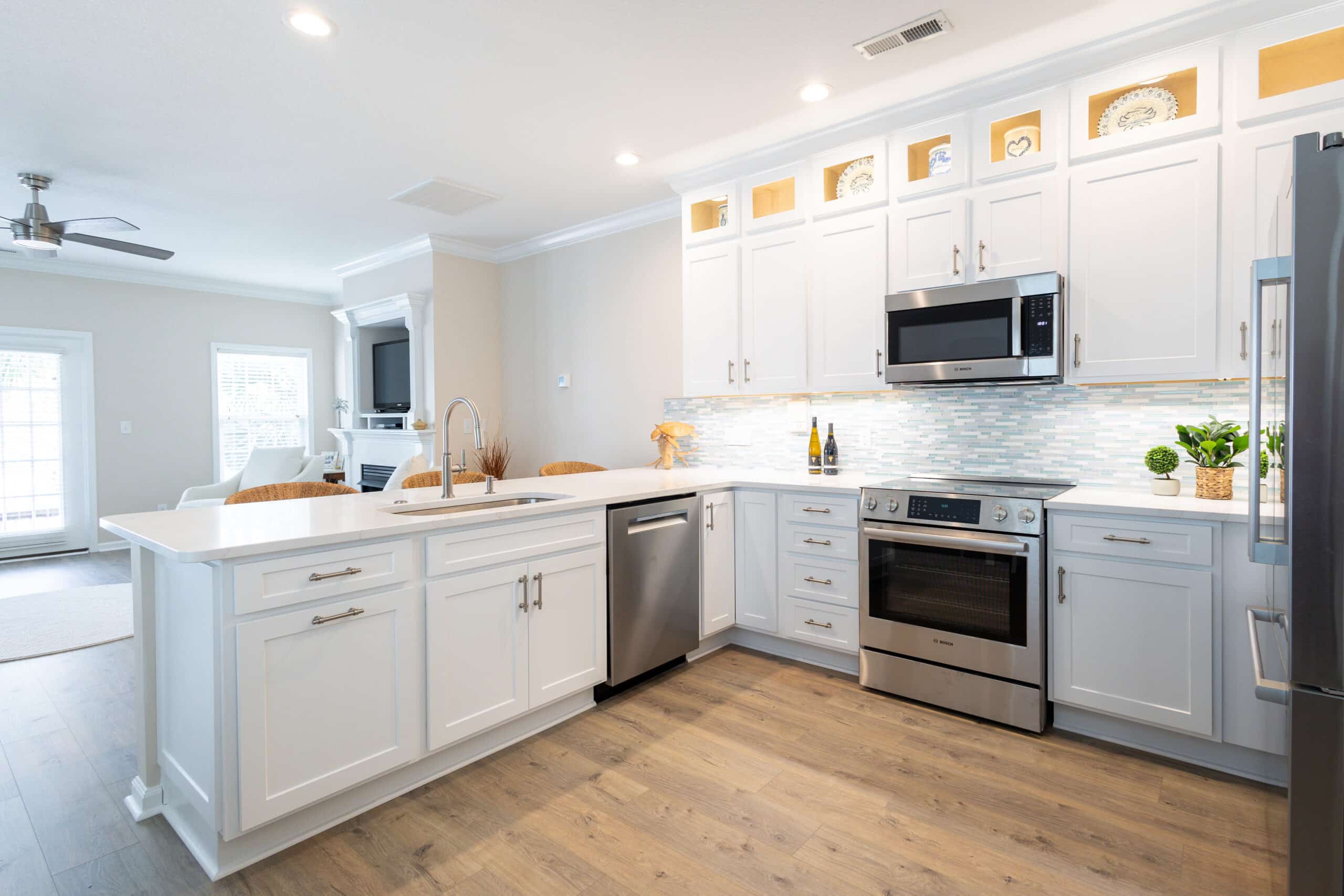
Most homeowners do not stop to ask how long do painted cabinets last until the finish already looks tired. By then, the choice feels rushed. Do you repaint again, hoping this time holds up better? Do you replace the cabinets entirely, at several times the cost? That decision is stressful precisely because it feels irreversible.
Here is the harder truth. A cabinet job that fails early is rarely about bad luck. It almost always traces back to a shortcut. Maybe the surface was not degreased before priming. Maybe the paint was a hardware store latex instead of a true cabinet enamel. Maybe the doors were brushed on the wall instead of sprayed off-site in a controlled space.
Knowing this ahead of time changes the whole decision. It is the difference between guessing and choosing with confidence. It is also the real answer behind how to keep cabinet paint from chipping. Get the prep right before a single coat goes on.
What We Do Differently at Carroll Custom Coatings
At Carroll Custom Coatings, our cabinet painting process starts with a full cleaning and degreasing of every surface. Paint will not bond to grease, no matter how good the product is. Doors and drawer fronts come off and get sprayed off-site. We use Evirolak and Icro, two self-leveling cabinet-grade paints built for exactly this kind of daily wear. Multiple thin coats are applied with light sanding between coats, which creates a smooth, factory-like finish rather than a brushed look.
This is not a shortcut version of house painting. It is a different process built around a different problem, and it is our answer to the question of how to keep cabinet paint from chipping before the first coat is ever applied. A wall is not touched 50 times a day. A cabinet door does.
| Approach | Typical Lifespan | Common Failure Point |
|---|---|---|
| Hardware store latex, brushed at home | 1 to 3 years | Paint stays soft and chips at the edges |
| Standard interior paint, DIY prep | 2 to 4 years | Grease and moisture break the bond |
| Cabinet-grade enamel, professional prep, and spray | 8 to 10 years, often longer | Rare, usually normal wear near hardware |
How to Keep Cabinet Paint From Chipping After the Job Is Done
The painting is only half the story. How to keep cabinet paint from chipping in the months and years after also depends on a few simple habits. Most homeowners who ask are surprised how small these habits really are.
None of this is complicated, but it is the part that homeowners are often not told about. A little awareness in year one goes a long way toward hitting that 8 to 10 year mark instead of falling short of it.
What a Well-Painted Kitchen Looks Like Years Later
Picture two kitchens painted on the same day. One owner wiped up spills quickly, used a soft cloth, and let the finish cure before hard use. The other scrubbed hard on day three and never thought about it again. Three years in, one kitchen still looks like it was painted last month. The other already has chips near the handles.
That gap is completely avoidable. Cabinet refinishing is also one of the highest returning updates a kitchen can get. According to Zonda’s 2025 Cost vs. Value Report, a minor kitchen remodel recoups well over its full cost at resale nationally. Cabinet painting falls under that category, making it one of the strongest value updates for any home.
Getting years out of a paint job is not a matter of luck. It comes down to the prep before the first coat and the care after the last one.