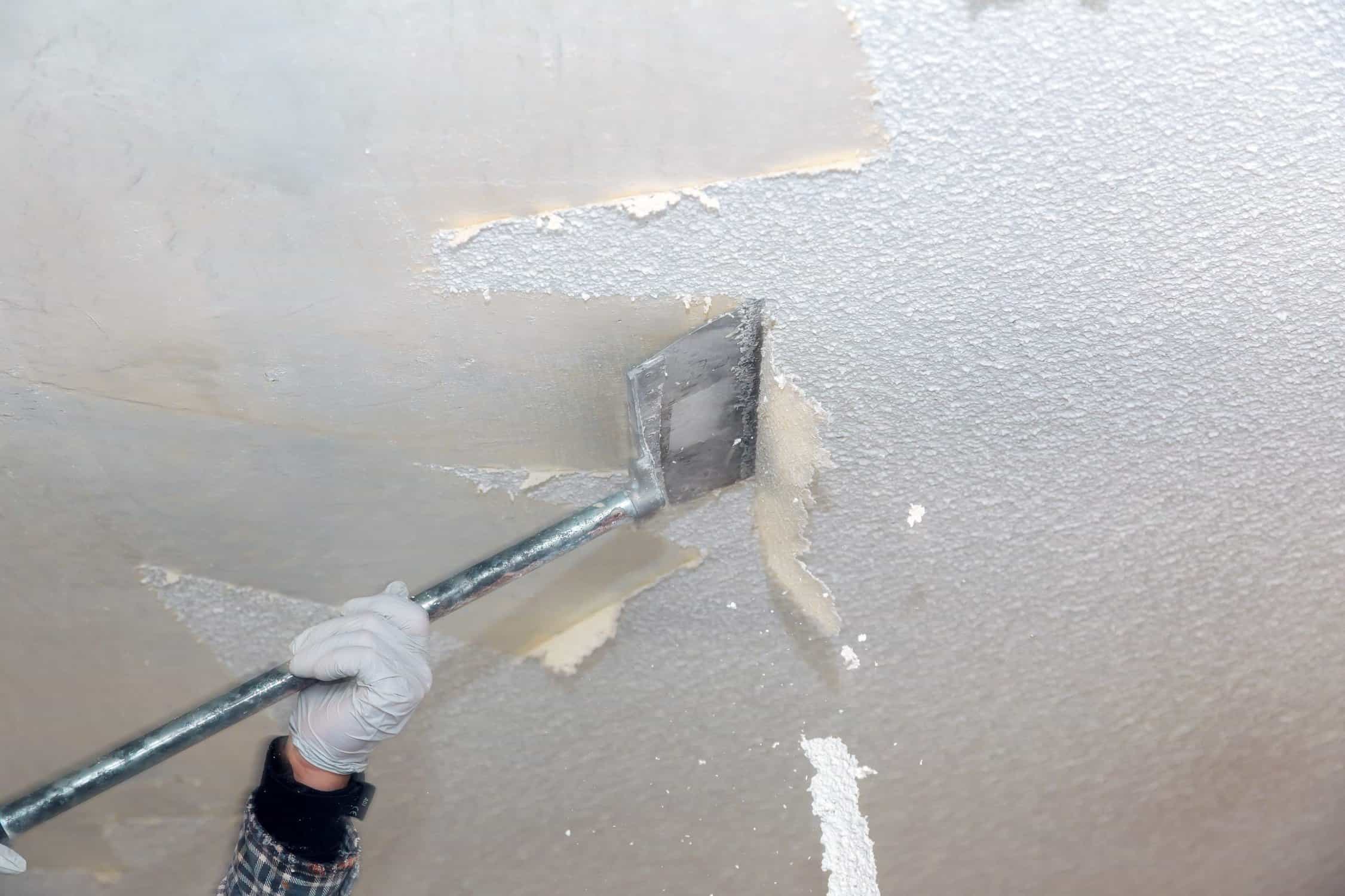
You look up at that bumpy white ceiling, and one question hits you. Does popcorn ceiling have asbestos, and is it safe to scrape off on a free weekend? It’s a smart question, and it’s the right one to ask before you touch anything. I’ve spent years on popcorn ceiling removal across the Grand Strand, and I’ll give it to you straight. Popcorn ceiling asbestos is the single biggest reason I ask homeowners to slow down before they grab a scraper.
Here’s the good news. A popcorn ceiling is not a reason to panic, and many are harmless. But some hide a real health risk. The only way to handle that risk well is to know what you’re working with first. This post covers three things every homeowner should know. What these ceilings contain, how to tell if yours is one of the risky ones, and whether removing it yourself is safe.

What a Popcorn Ceiling Is Actually Made Of
Let’s start with the ceiling itself. A popcorn ceiling is a spray-on texture that was popular from the 1950s into the 1980s. Builders liked it because it hid flaws, reduced noise, and went up quickly. That speed and low cost are exactly why it landed in so many homes.
So, what is popcorn ceiling made of? The texture comes from paint, a sticky binder, and a lightweight filler that creates the popcorn look. That filler was often one of a few materials:
The first two are a nuisance at worst. The third is the one that matters for your health. Age is the biggest clue to which camp your ceiling falls into, and that’s where the asbestos question comes in.
Does Popcorn Ceiling Have Asbestos? Start With the Age
The honest answer is that it depends on when your ceiling went up. Asbestos was cheap, strong, and fire-resistant, so it got mixed into all kinds of building products for years. The government started restricting spray-on asbestos in the 1970s, but leftover stock kept getting installed well after that. That lag is why the calendar matters more than how the ceiling looks.
Here’s a simple way to think about the odds based on your home’s age:
| When the ceiling was installed | Asbestos risk |
|---|---|
| Before 1980 | Higher. Treat it as suspect until it’s tested. |
| Early to mid 1980s | Possible. Leftover material was still in use. |
| 1990s or later | Low. Most asbestos textures were off the market. |
None of this is a diagnosis. It’s a starting point. Homes across Conway and the Grand Strand span every one of these eras. I’ve seen risky ceilings in houses people assumed were too new to worry about. When you’re not sure, the safe move is to treat the ceiling as if it could contain asbestos. Wait for a test to say otherwise. The federal EPA guidance for families says the same thing.
How to Test for Popcorn Ceiling Asbestos
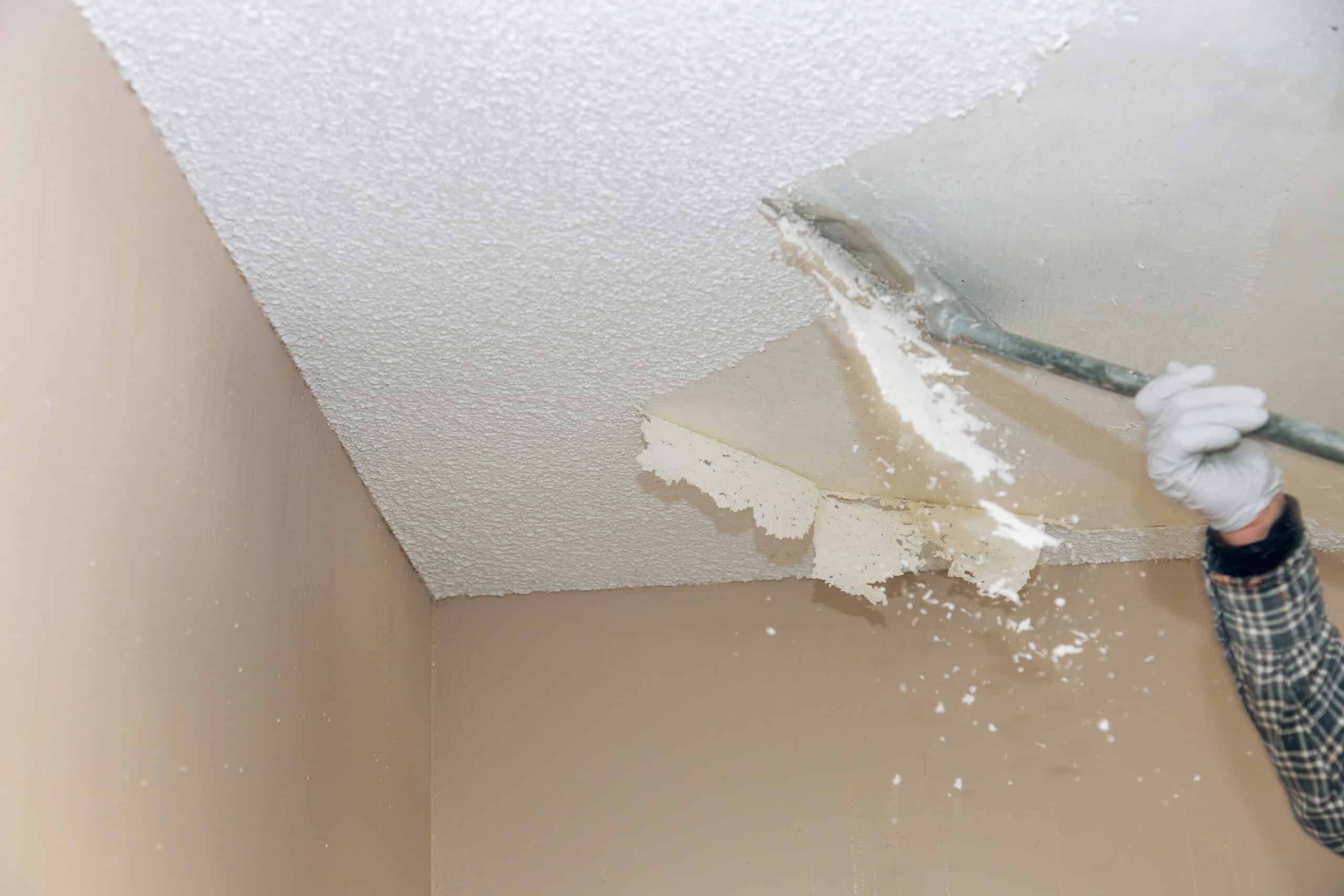
Plenty of people ask me how to tell if a popcorn ceiling has asbestos on their own. I get it, because nobody wants to pay for a test if they can just look. But here’s the hard truth from every health agency that studies this. You cannot see asbestos fibers with the naked eye. A ceiling loaded with them looks exactly like one without them.
The only way to know is with a lab test. A trained inspector takes a small sample properly and seals it. Then it goes to a certified lab, where it is examined under a microscope. That last part matters. Scraping off a chunk yourself to check is the exact action that can push fibers into the air. The Consumer Product Safety Commission points out that sanding, scraping, or drilling these surfaces is what releases the fibers. Taking your own sample can be more dangerous than leaving the ceiling alone.
This is one place I never cut corners. On any ceiling that could predate the 1990s, we test before we touch it. If it comes back clean, great, and we move ahead. If it doesn’t, you get a clear answer and a safe plan instead of a guess.
Is It Safe to Remove a Popcorn Ceiling Yourself?
Here’s the question you really came for. Can you take the ceiling down yourself? If your ceiling tests clean of asbestos, then yes. DIY removal is messy and slow, but it’s doable. The whole calculation changes the moment asbestos is in the mix.
When asbestos-containing material is in good shape and left alone, it usually stays put and poses little risk. Dry-scraping a ceiling does the opposite. It breaks the material apart and pushes microscopic fibers into the air you breathe. Those fibers are the problem. Breathing them in is linked to serious lung diseases. That list includes asbestosis, lung cancer, and mesothelioma, and those illnesses can surface decades after exposure. No level of exposure is considered safe.
So a free weekend project can carry a cost you won’t see for years. That’s the honest math. Here’s how the two paths compare on a ceiling that could contain asbestos:
| DIY scraping | Professional removal | |
|---|---|---|
| Testing first | Usually skipped | Done before any work starts |
| Fiber control | None. Dust spreads through the home. | Sealed containment and careful cleanup |
| Disposal | Often tossed with regular trash | Handled as regulated material |
| Health risk | Falls on you and your family | Managed by a trained crew |
| Redo risk | High if it’s done wrong | Low, with the ceiling repainted after |
For a clean ceiling, a weekend and a rented sprayer will get you there. For a ceiling that could hold asbestos, professional popcorn ceiling removal is the safer call by a wide margin.
What Getting It Right Protects You From
Doing this the right way isn’t about spending more for its own sake. It’s about what you avoid. A safe removal keeps a one-time project from turning into a long-term problem. Handled well, you steer clear of:
That’s the trade I want every homeowner to see clearly. A tested, contained, properly finished ceiling is worth far more than the few hundred dollars a shortcut might save. When the job is done right, you get a smooth, modern ceiling and real peace of mind. That beats a gamble every time.