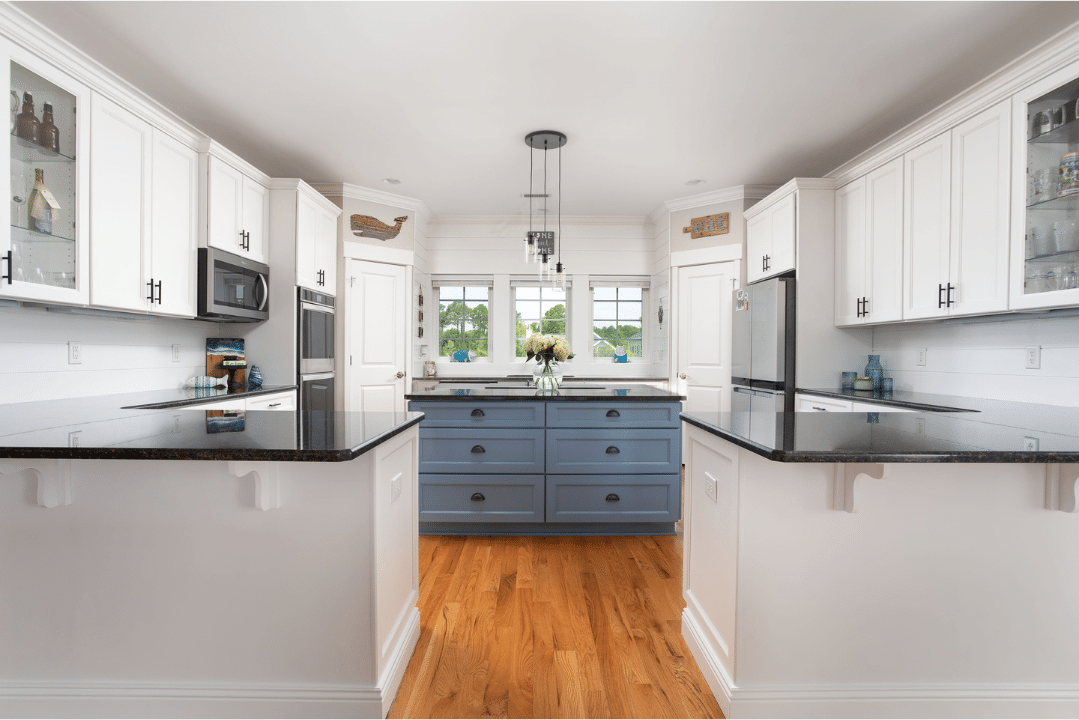
I always hear one question more than almost any other when a homeowner in Conway, SC, is ready to repaint their kitchen: what’s the best paint finish for kitchen cabinets? Satin and semi-gloss both look sharp on a paint chip. But satin vs semi gloss cabinets isn’t really about which one looks better in the store. It’s about which one holds up to grease, water, and the same spots getting touched every day. Our professional cabinet painting process uses factory-grade, self-leveling paints applied off-site for a smooth finish, and we choose the right sheen from the very first conversation.
This guide breaks down the real differences between satin and semi-gloss, what each one actually does in a working kitchen, and how to pick the one that fits your home. No guesswork, just the facts side by side.

What Sheen Actually Means for Your Cabinets
Sheen is how much light a dried paint film reflects. The paint industry measures it with a glossmeter, checking reflectance at a specific angle to sort finishes into categories like flat, eggshell, satin, semi-gloss, and gloss. According to the Painting Contractors Association, sheen and gloss are technical, measurable properties of a paint film, not just marketing language. That matters here because satin and semi-gloss aren’t just two shades of the same idea. They sit at different points on that reflectance scale, and that difference changes how the paint performs once it’s on your cabinets.
Satin vs. Semi-Gloss: Side by Side
Here’s how the two finishes actually compare once the paint has cured:
| Factor | Satin | Semi-Gloss |
|---|---|---|
| Shine level | Low to medium | Medium to high |
| Scrub resistance | Good | Better |
| Hides grain and minor flaws | Yes, more forgiving | No, shows more detail |
| Best fit | Lower-traffic kitchens, softer look | High-traffic kitchens, heavy daily use |
| Light reflection | Subtle | Noticeable, brightens the space |
Neither finish is wrong. The right pick depends on how many hands touch your cabinet doors on an average day.
Which Finish Holds Up Better in a Kitchen
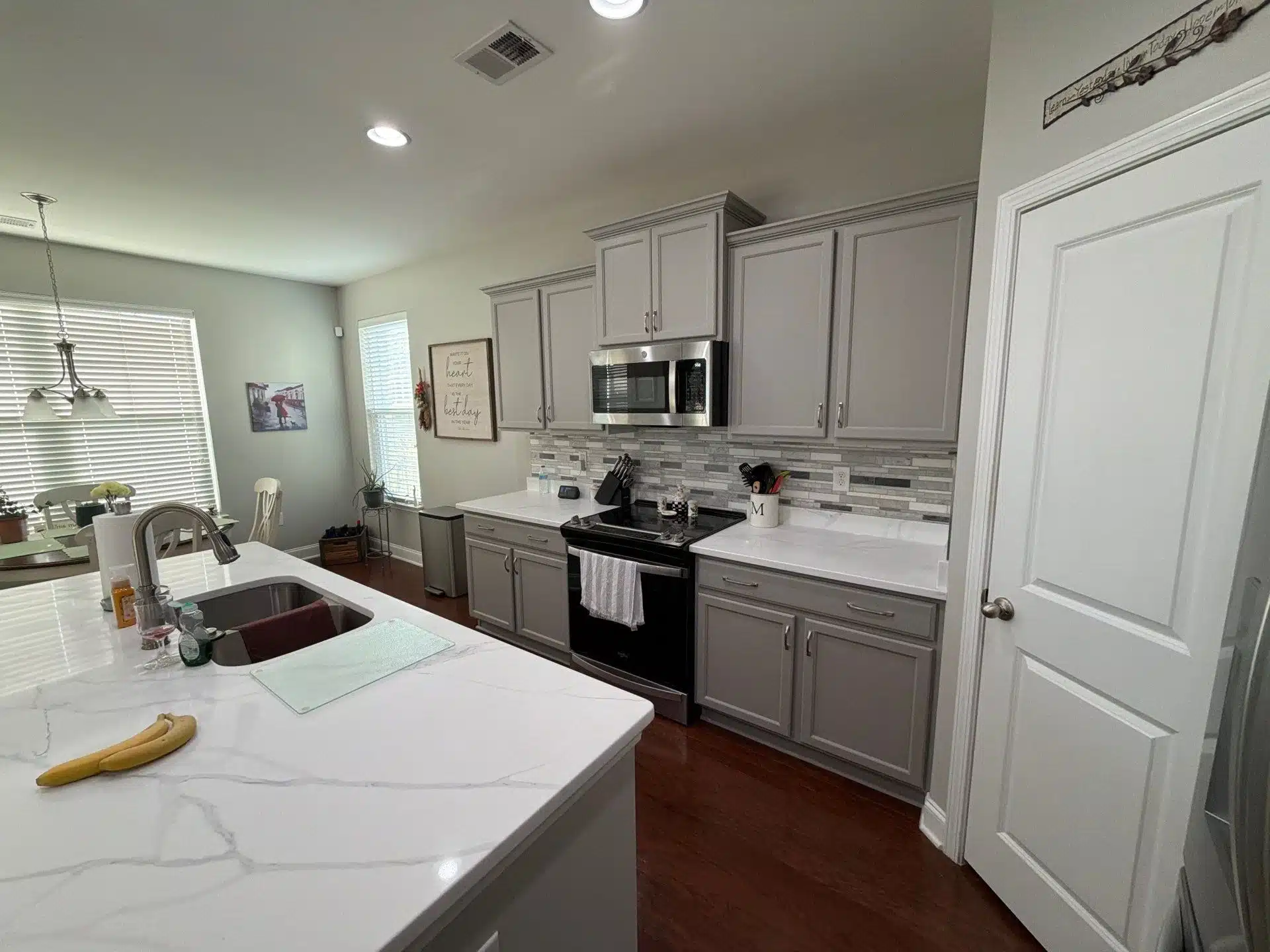
Kitchens take more abuse than almost any other room in the house. Grease, steam, water, and constant hand contact all work against a painted surface, and that’s before you factor in South Carolina humidity. Our cabinet refinishing and resurfacing service is built around that reality: every project starts with a full clean and degrease, then multiple thin coats of primer and paint, sanded between coats, for a finish that’s meant to last. Semi-gloss generally holds up better to scrubbing and grease because of its tighter, harder paint film. Satin can still perform well in a kitchen, but it’s a better match for cabinets that see moderate use rather than a household running three meals a day through the same drawers.
Where Satin Works Better
Where Semi-Gloss Works Better
What a Professional Weighs Before Recommending a Finish
Cabinet refinishing work is typically judged against Level 4 to Level 5 finish standards, the range the Painting Contractors Association sets for high-end residential work, meaning consistent color, sheen, and a smooth surface across every door and drawer front. That standard is part of why paint choice on cabinets is such a common renovation decision. The most recent Houzz Kitchen Trends Study found that 57% of homeowners now choose paint over stain or veneer for their cabinet finish. With so many painted kitchens out there, picking the right sheen does much of the long-term work once you’ve chosen the color.
A Few Other Things That Affect the Decision
Sheen doesn’t work in isolation. Cabinet material and color both change how a finish reads in real life. Solid wood doors with visible grain tend to hide sheen differences better than smooth MDF or slab-style doors, where any shine shows every imperfection underneath. Color matters too: dark colors show sheen and surface flaws more than light colors do, since less pigment softens the reflection. A deep navy or black cabinet in semi-gloss will show fingerprints faster than the same color in satin. None of that makes one finish wrong; it just means the full picture, not sheen alone, should drive the decision.
What Skipping This Decision Can Cost You
Choosing a sheen without thinking through how the kitchen will be used can lead to a repaint sooner than planned. A high-shine finish in a kitchen that barely gets touched can look harsher than expected under bright cabinet lighting. A soft satin finish on cabinets near a busy stove can start showing wear within a couple of years instead of lasting a decade. Neither outcome is expensive to avoid, but both are common when you choose based on looks alone instead of daily use.
Common Questions About Cabinet Sheen